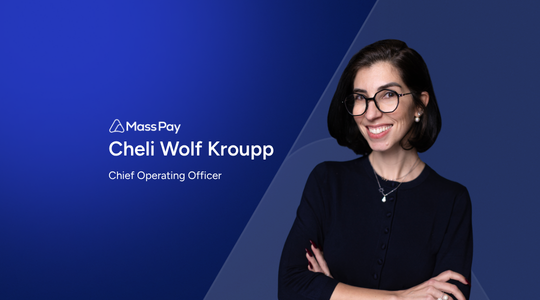
Global payouts coverage isn’t a technical checkbox. It’s a human commitment. Discover how that commitment feeds success
By Cheli Wolf Kroupp
There's a version of globalization that sounds simple: technology connects us, borders become irrelevant, and the world shrinks into a single seamless marketplace. And in some ways, that's true. A platform built in Austin can pay a creator in Jakarta, a contractor in Nairobi, or a winner in Warsaw - all before lunch. The infrastructure to move money across the world has never been more accessible.
But here's what I've learned running operations at a truly global payout company: the world getting smaller doesn't make it more uniform. If anything, the closer you get to the edges of the global economy, the wider the cultural distance becomes. And the companies that ignore that gap - that treat "global coverage" as a technical checkbox rather than a human commitment - are the ones that quietly fail the people they're supposed to be paying.
That tension sits at the center of everything we do at MassPay. It shows up in three places: our people, our partners, and our clients.
Our People
Building a team that can actually serve every non-sanctioned market on the planet isn't just a hiring exercise. It's a daily reminder that the way we communicate, make decisions, give feedback, and build trust varies from region to region. A direct style that reads as confident in one culture reads as aggressive in another. A collaborative approach that signals respect in one context signals indecision in another. What we've built at MassPay is a practice of being deeply intentional with every step - laser focused on understanding what the person across from us actually needs, not just what we assume they need. That’s what turns a diverse team into a high-performing one.
It's made us sharper. Not because we've resolved the differences, but because we've stopped pretending they don't exist, instead focusing on deeply understanding and then serving local payout preferences.
Our Partners
Every banking relationship, every last-mile provider, every local network we've built into our infrastructure is unique. Each came with its own set of expectations and requirements about how deals get done, what trust looks like before a contract is signed, what responsiveness means, and what a long-term relationship is worth. We've invested in building real relationships across all of them. And what we've found is that the deepest ones - the partnerships where we've genuinely closed the cultural gap - are the ones that flourish.
When both sides speak the same language, even when they literally don't, something shifts. The conversation moves from "what's standard" to "what can we actually do together." That's where innovation lives. That's where we've been able to build things that wouldn't have been possible if we'd treated the relationship as purely transactional.
Our Clients
This is where the stakes are highest. Our clients are platforms - marketplaces, creator economy companies, gaming operators, gig platforms - and their end recipients are real people, often in markets where a delayed or failed payout isn't just an inconvenience. It's a signal that you don't see them.
What we've found is that the friction in global payouts is rarely purely technical. It's the KYC process that assumes everyone has a government-issued ID in a standard format. It's the disbursement flow that defaults to bank transfer in a market where mobile wallets are the primary financial tool. It's the support interaction that works perfectly in English and breaks down everywhere else. Getting people paid - really paid, in a way that lands with dignity and reliability - means understanding the context on the other end of the transaction.
The world is full of platforms that have figured out how to sell globally. Few have figured out how to pay globally. The difference, more often than not, isn't the technology. It's the willingness to sit with the complexity of cultural difference long enough to get it right.
At MassPay, we talk a lot about coverage. About rails. About speed and scale. And those things matter - they're the foundation. But the reason we've been able to build what we've built across every corner of the world isn't just the network. It's the understanding that every market we enter has its own definition of what it means to be paid - and that definition deserves our respect.
The world is getting smaller. Our job is to make sure it doesn't get flatter in the process.

.jpg)